





What Is the Best Zirconia Sintering Furnace?
 Sep 28, 2026|
What Is the Best Zirconia Sintering Furnace?
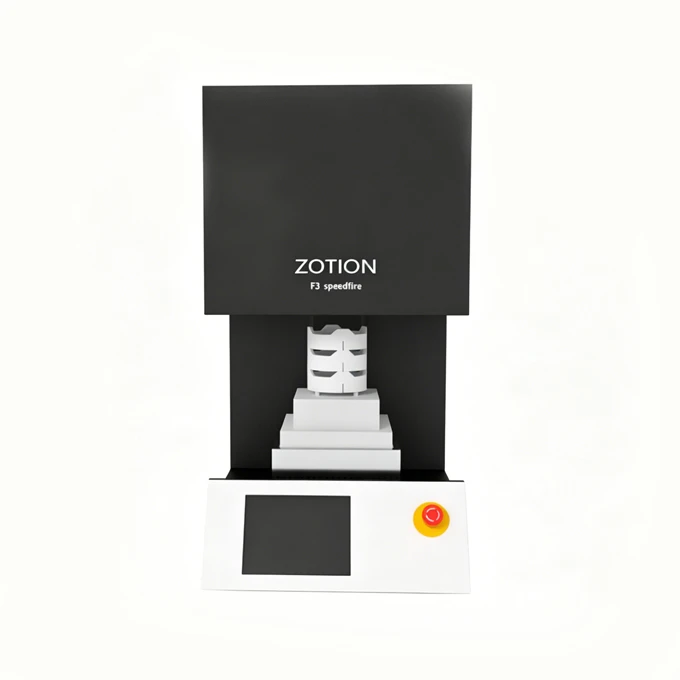
When a dental laboratory starts searching for a zirconia sintering furnace, one of the first questions is usually:
"Which furnace is the best?"
It sounds like a simple question, but it is difficult to answer with one model or one specification.
A small laboratory producing a few crowns each day has different requirements from a production laboratory processing hundreds of units every week. A laboratory mainly working with conventional zirconia may not need the same type of furnace as a laboratory handling multiple multilayer materials with different firing programs.
Distributors also evaluate equipment from a different perspective. Installation, spare parts, warranty, training, and long-term technical support can be just as important as the furnace itself.
From a manufacturer's point of view, I would not define the best zirconia sintering furnace as the one with the highest maximum temperature, the fastest heating rate, or the largest chamber.
A more practical question is:
Which furnace fits the laboratory's materials, workload, workflow, and maintenance requirements?
This answer may sound less direct than saying one furnace is "the best," but it is closer to what happens in real production environments.
Start With the Laboratory's Actual Workload
Before comparing technical specifications, I would first look at how many restorations a laboratory actually needs to sinter.
For example, consider two laboratories.
Laboratory A
10–20 crowns per day
Mainly single crowns
One or two zirconia materials
Conventional overnight production
Laboratory B
100+ units per day
Crowns, bridges, and implant restorations
Several zirconia products
Multiple daily firing cycles
Frequent urgent orders
It would not be reasonable to select their furnaces using exactly the same criteria.
For Laboratory A, a compact furnace with a smaller chamber may already meet its production needs. Paying significantly more for a much larger chamber may not bring practical benefits if the additional space is rarely used.
For Laboratory B, chamber capacity becomes a much more important factor.
A furnace that can only process a limited number of units per cycle may force the laboratory to run additional cycles every week.
When manufacturers provide a specification such as "maximum number of crowns," buyers should look at the loading conditions behind that number.
The actual capacity depends on:
restoration size;
tray arrangement;
sintering supports;
spacing between restorations;
the type of restoration being processed.
A chamber that physically holds 60 small crowns does not necessarily hold 60 large implant-supported restorations.
For this reason, I recommend that laboratories ask suppliers for capacity under a defined loading condition, rather than simply asking:
"How many crowns can it hold?"
A more useful question is:
"How many typical crowns from our workflow can be loaded per cycle while following the recommended loading arrangement?"
This gives the laboratory a number that is closer to daily production reality.
Chamber Size Is Not the Same as Production Capacity
A larger chamber sounds attractive, but a larger size does not automatically mean higher efficiency.
Suppose a laboratory processes 15 units per day.
A furnace with a very large chamber may leave a significant amount of unused space during each cycle.
The laboratory has paid for capacity that it does not regularly use.
Now consider a production laboratory processing 150 units per day.
The situation changes completely.
If one furnace can process 50 units per cycle and another can process 20 units, the difference in the number of cycles becomes significant.
At three cycles of 50 units, the laboratory can process 150 units.
At 20 units per cycle, it would need around eight cycles to process the same amount.
The actual result depends on the furnace program and loading conditions, but the principle is straightforward:
Furnace capacity should be evaluated based on daily production requirements, not only the largest number shown in a specification sheet.
Another factor that is often overlooked is that laboratories do not always fill the entire chamber.
Different restorations have different shapes and heights. Some cases require specific supports or placement methods.
Because of this, usable working space is usually more meaningful than the external size of the furnace.
When comparing two furnaces, I would check:
chamber dimensions;
usable tray area;
number of trays;
vertical clearance;
recommended spacing;
maximum practical restoration size;
loading flexibility.
These details provide more information than simply comparing the outside dimensions of two machines.
How Many Programs Does a Laboratory Actually Need?
Another specification commonly listed on furnace datasheets is the number of programmable cycles.
A furnace may offer 10, 20, 30, or even more programs.
However, a higher number does not automatically mean better usability.
Most laboratories may only need programs for:
conventional zirconia;
multilayer zirconia;
another zirconia brand;
speed sintering;
test firing;
maintenance or calibration procedures.
The key point is whether the furnace allows these programs to be stored, edited, and identified clearly.
This becomes especially useful when a laboratory works with several zirconia brands.
Imagine an operator using five different zirconia products, each with its own recommended firing schedule.
If the furnace allows all five programs to be saved with clear names, the risk of selecting the wrong program is reduced.
If the operator has to manually enter parameters every time, the possibility of mistakes increases.
This is not only a zirconia issue.
It is a workflow management issue.
For a production laboratory, I would pay more attention to the program management system rather than only the number of available programs.
Useful functions may include:
editable multi-stage programs;
clear program names;
saved heating and cooling stages;
holding-time settings;
password or access protection;
program duplication;
program deletion;
error notifications;
cycle history.
A simple and clear control system can sometimes be more practical than a complicated interface with many functions that operators rarely use.
Can One Furnace Work With Different Zirconia Brands?
In many laboratories, the answer needs to be yes.
A laboratory may use one zirconia material for high-strength posterior restorations, another multilayer zirconia for aesthetic cases, and a third material for a specific customer requirement.
The key question is not only whether the furnace can reach the required temperature.
Most modern dental zirconia furnaces can reach temperatures higher than the range required for conventional zirconia sintering.
The more important question is whether the furnace can accurately reproduce the different firing schedules required by each material.
Zirconia manufacturers do not always use identical sintering protocols.
A 2022 systematic review of conventional, speed, and high-speed zirconia sintering analyzed 15 in-vitro studies involving 3Y, 4Y, and 5Y zirconia materials. The review showed that the final results depended on both the zirconia composition and the sintering protocol rather than one universal firing method applying to all materials.
For a laboratory, this means furnace selection should not be based only on maximum temperature.
The furnace should support the firing programs required by the zirconia materials that the laboratory actually uses.
Conventional or Speed Sintering?
Another common question from laboratories is:
"Should I choose a conventional furnace or a high-speed furnace?"
Again, the answer depends on the laboratory's production requirements.
A conventional furnace may require several hours to complete a full cycle.
A speed or high-speed system can significantly shorten processing time.
One published study compared conventional and high-speed sintering of monolithic zirconia crowns. The conventional protocol used a heating rate of 10°C/min with a 120-minute holding time at 1500°C, resulting in a total cycle of approximately 8 hours. The high-speed protocol used a heating rate of 300°C/min with a 2-minute holding time at 1500°C, completing the reported cycle in approximately 15 minutes.
The difference in processing time is significant.
However, production time should not be evaluated only by looking at the furnace cycle.
The zirconia material also plays an important role.
Another study comparing conventional and speed-sintered zirconia found that speed-sintered groups could achieve similar mechanical and optical results under the tested conditions.
At the same time, another study involving 3Y, 4Y, and 5Y zirconias reported differences in density, optical properties, and microstructure between conventional, speed, and high-speed sintering groups.
For this reason, laboratories should ask:
Which zirconia materials do we use, and are their recommended speed programs compatible with this furnace?
If a laboratory mainly produces standard cases overnight, a conventional furnace may already meet its needs.
If the laboratory frequently receives same-day cases, a faster system may provide more practical value.
The equipment should fit the workflow instead of forcing the laboratory to change its workflow around the equipment.
What About a Small Furnace With a Very Fast Cycle?
This type of furnace can be attractive for smaller laboratories.
Imagine a laboratory receiving urgent cases in the morning and needing completed restorations in the afternoon.
A conventional eight-hour cycle may not fit this schedule.
A fast furnace that can process compatible restorations within a shorter cycle may provide more flexibility.
However, laboratories should evaluate the complete production process.
For example:
Milling → finishing → sintering → adjustment → staining/glazing → delivery
If sintering only takes 20 minutes but milling and finishing require several hours, reducing sintering time may have limited influence on the final delivery time.
On the other hand, if the laboratory already has enough milling capacity and finishing stations, but the furnace has become the production bottleneck, faster sintering may have a greater effect.
When discussing furnace selection with customers, I usually ask:
"Where is your current production bottleneck?"
This question is often more useful than immediately recommending the fastest furnace available.
Heating Rate Is Not the Only Specification to Compare
A furnace may advertise:
150°C/min
while another model advertises:
100°C/min
It is easy to assume that the higher number represents better performance.
However, laboratories should understand how the heating rate is measured and under what conditions it is specified.
A sintering cycle is not determined by one heating-rate value.
A complete program may include:
drying;
preheating;
multiple heating stages;
peak temperature;
holding time;
cooling stages.
Different zirconia materials may require different combinations.
A 2024 study comparing conventional and speed protocols for mixed 3Y/5Y multilayer zirconias provides an example. For E.max ZirCAD Prime, the conventional protocol included 1500°C for 120 minutes, while the speed protocol used 1530°C for 60 minutes. For Cercon ht ML, the conventional protocol used 1500°C for 135 minutes, while the speed protocol used 1520°C for 35 minutes.
The important point is that speed sintering is not simply:
"Heat faster and use the same program."
The complete firing schedule changes.
When comparing furnaces, laboratories should ask suppliers for the actual programmable stages rather than comparing only the maximum heating rate.
What Kind of Heating Element Should a Furnace Use?
This is a technical detail that many buyers only consider when maintenance is required.
Dental sintering furnaces commonly use molybdenum disilicide heating elements, often written as MoSi₂.
These elements generate heat through electrical resistance.
The design and arrangement of heating elements influence temperature performance, stability, and maintenance requirements.
For buyers, the important question is not only:
"Does this furnace use MoSi₂ rods?"
A more useful set of questions would be:
How many heating elements are installed?
Where are they positioned?
Can individual elements be replaced?
Are replacement parts available?
How often should they be inspected?
Can local technicians replace them?
What is the recommended maintenance process?
Heating elements are consumable components in the sense that their performance can gradually decrease over time and replacement may eventually be required.
For a dental laboratory, the replacement cost is only one part of the consideration.
Production interruption can create a larger impact.
For example, if a laboratory processes 100 restorations per day and the furnace stops for several days, the lost production may exceed the cost of the spare parts.
For this reason, serviceability should be considered before purchasing the equipment, not only after a failure occurs.
What Happens When a Furnace Needs Repair?
This is where the difference between a dental laboratory furnace and a general industrial furnace becomes clear.
Many dental laboratories do not have a dedicated equipment engineer on site.
Operators need clear answers to practical questions:
Who provides technical support?
How quickly can replacement parts be delivered?
Are common spare parts available?
Can customers replace certain components locally?
Is remote troubleshooting available?
What does the warranty cover?
Is installation or operator training provided?
For overseas laboratories, these questions become even more relevant.
A technically capable furnace can still become difficult to operate if support is unavailable after installation.
From a manufacturer's perspective, I believe distributors should understand service requirements before selling equipment, rather than dealing with these questions only after a customer experiences a problem.
Does a Dental Laboratory Need Data Logging?
For a small laboratory, data logging may not seem necessary.
For a production laboratory, it can become a useful troubleshooting tool.
Imagine a customer reports:
"The zirconia from yesterday's cycle looks different."
Without a record of the firing cycle, it can be difficult to identify the cause.
The operator may remember selecting the normal program, but that does not confirm whether the complete cycle ran correctly.
A furnace with cycle records can provide information such as:
selected program;
target temperature;
actual heating stages;
holding time;
error events;
completion status.
This information can make technical communication between the laboratory, distributor, and manufacturer much easier.
It also helps separate two different situations:
Material-related problems
and
Equipment or process-related problems.
For distributors, cycle records can reduce unnecessary product returns because the first investigation can be based on actual firing information rather than assumptions.
What About Power Consumption?
Power consumption is another factor that is often overlooked when laboratories compare furnaces.
A sintering furnace may operate for several hours during a conventional firing cycle, so energy use can become part of the long-term operating cost.
For example, suppose a laboratory operates a 2.5 kW furnace for an 8-hour cycle.
A simple upper-limit calculation would be:
2.5 kW × 8 h = 20 kWh
The actual energy consumption may be lower because the furnace does not continuously operate at its maximum rated power throughout the entire cycle.
However, this calculation helps laboratories understand why cycle duration can influence operating costs.
Now imagine a laboratory running 20 similar cycles per month.
Using the rated-power upper limit:
20 kWh × 20 cycles = 400 kWh
This is not an electricity-cost quotation because actual consumption depends on local electricity prices, furnace insulation, loading conditions, and operating programs.
However, it provides a simple method for laboratories to estimate their own energy costs.
For high-volume laboratories, it is useful to consider:
purchase price + electricity + maintenance + spare parts + labor + downtime
instead of looking only at the initial purchase price.
A Lower Purchase Price Does Not Always Mean Lower Cost
This is an important difference for laboratory owners and distributors.
Consider two examples.
Furnace A
lower purchase price;
smaller capacity;
lower replacement-part cost;
limited technical support.
Furnace B
higher purchase price;
larger capacity;
better program management;
stronger technical support;
higher spare-part cost.
Which one costs less over five years?
The purchase price alone cannot answer this question.
A more complete evaluation should include:
Initial Cost
Purchase price, shipping, installation, and required accessories.
Operating Cost
Electricity consumption and consumable components.
Maintenance
Heating elements, sensors, insulation, and other replaceable parts.
Downtime
The possible production impact if the furnace stops working.
Production Capacity
The number of restorations that can realistically be processed per cycle.
Labor
Operator time required for loading, programming, monitoring, and maintenance.
This approach gives a more realistic understanding of equipment cost.
How Many Trays Are Actually Useful?
Multiple trays can improve loading flexibility, but more trays do not automatically mean higher production.
The laboratory needs to consider how the available vertical space can actually be used.
For example, a furnace may have three trays, but if large restorations can only be placed safely on one or two levels, the theoretical tray number may not represent the real working capacity.
Before purchasing, I recommend asking suppliers to provide:
tray dimensions;
vertical distance between trays;
recommended loading examples;
maximum practical number of restorations;
whether all trays can be used at the same time.
A photograph showing an actual loaded chamber can sometimes provide more useful information than a sentence in a specification sheet.
What About Cooling?
Cooling is another part of the firing cycle that affects production planning.
A furnace may advertise a short heating period, but the restoration cannot always be removed immediately after reaching the holding temperature.
The real production time includes the complete process.
For laboratories handling urgent cases, the more meaningful question is not only:
"How quickly can the furnace reach peak temperature?"
It is:
"How long does it take from loading the restoration to safely removing the finished restoration?"
This is the time that affects daily scheduling.
If a supplier states that a furnace provides a "30-minute sintering cycle," the laboratory should ask whether this includes:
heating only;
heating and holding;
the complete programmed cycle;
cooling time.
Without this clarification, two manufacturers may use the same phrase while describing different processes.
What Should a New Laboratory Buy?
Let's consider a practical example.
A new dental laboratory expects to produce:
15–30 zirconia units per day;
mainly single crowns;
conventional sintering;
one or two zirconia brands;
occasional urgent cases.
For this type of laboratory, I would focus on:
practical chamber capacity;
stable program control;
ease of operation;
service availability;
spare-part supply;
warranty conditions;
compatibility with zirconia materials;
reasonable energy consumption.
A very large production furnace may not be necessary.
Now consider another laboratory:
150–300 units per day;
multiple zirconia brands;
several milling machines;
multiple production shifts;
frequent urgent cases.
The priorities change.
Capacity, cycle management, reliability, maintenance efficiency, program storage, and service response become much more important.
The same furnace cannot automatically meet both laboratories' needs simply because one specification sheet appears stronger.
What Should a Distributor Look For?
A distributor evaluates a furnace from a different perspective.
The distributor is not only purchasing equipment.
The distributor is also building a support system around the equipment.
Before introducing a furnace to the market, I would ask the manufacturer:
Technical Documentation
Are installation manuals, operation guides, and maintenance documents available?
Spare Parts
Which components are commonly replaced?
Are these parts available when customers need them?
Training
Can distributor engineers receive technical training?
Warranty
What is included?
What conditions are excluded?
Remote Support
Can the manufacturer assist with troubleshooting remotely?
Software
Can control software or firmware be updated?
Installation Requirements
What are the requirements for voltage, power supply, ventilation, and working space?
Customer Feedback
Can the manufacturer provide information from existing laboratory installations?
A distributor may sell a furnace once.
However, the distributor may need to support that customer for many years.
This changes the meaning of choosing the "best" furnace.
Don't Compare Furnaces Using Only Five Numbers
A typical comparison table may include:
maximum temperature;
heating rate;
chamber volume;
power;
price.
These specifications are useful, but they do not show the complete picture.
I would also compare:
| Category | What to check |
|---|---|
| Workload | Units per day |
| Capacity | Practical units per cycle |
| Programs | Number and flexibility |
| Materials | Supported zirconia programs |
| Cycle | Complete cycle time, including cooling |
| Loading | Tray arrangement and usable space |
| Maintenance | Heating elements, sensors, insulation |
| Service | Local and remote support |
| Parts | Availability and delivery time |
| Data | Cycle records and error history |
| Installation | Voltage, power, and space |
| Warranty | Coverage and duration |
| Training | Operator and distributor training |
| Cost | Purchase + operation + maintenance |
This type of comparison is much closer to the questions laboratories should ask before purchasing equipment.
Is a More Expensive Furnace Better?
Not necessarily.
The price of a furnace usually reflects many factors:
components;
chamber size;
control system;
heating elements;
insulation;
software;
manufacturing quality;
accessories;
warranty;
technical support.
However, price alone cannot determine whether a furnace fits a laboratory.
A better question is:
"What am I paying for, and will my laboratory actually use these functions?"
For example, if a laboratory does not use high-speed sintering, paying extra for a system focused mainly on high-speed production may not provide practical value.
If a laboratory processes hundreds of units every week, paying more for capacity and service support may be reasonable.
The comparison should not simply be:
cheap vs expensive
It should be:
purchase cost vs actual production requirements.
A Useful Way to Compare Three Furnaces
Suppose a laboratory is comparing three models.
Furnace A
Small chamber, conventional cycle, simple controls, lower purchase price.
Furnace B
Medium chamber, multiple programmable stages, conventional and speed programs, moderate price.
Furnace C
Large chamber, advanced control system, high capacity, higher purchase price and operating requirements.
Instead of asking:
"Which one is the best?"
The laboratory can compare each model against its own production needs.
For example:
Daily production: 80 units
Required capacity: 40 units/cycle
Materials: 4 zirconia products
Urgent cases: Yes
Service: Local distributor available
Target: Two or three cycles per day
Under these conditions, a medium or large furnace may better match the workflow than the smallest model.
However, if daily production is only 15 units, the result may be completely different.
This is why a universal ranking of sintering furnaces is difficult to create.
The laboratory's own production data should guide the selection.
What Does Research Tell Us About Furnace Type?
Research provides another reason to avoid simple rankings.
Different furnace technologies can achieve acceptable zirconia results when the firing schedule is properly developed for the material.
A 2019 study compared zirconia sintered for approximately 26 minutes in a high-speed induction furnace with zirconia sintered for approximately 4.3 hours in a conventional furnace. The study reported no significant differences in flexural strength, translucency, or opalescence for the tested material, although the high-speed group showed a smaller grain size.
Another study compared a 15-minute microwave speed-sintering process at 1450°C with conventional sintering at 1530°C for 2 hours. Under the tested conditions, the microwave group showed differences in density, grain size, phase composition, and translucency.
These studies do not indicate that one furnace type is always better.
They show that furnace technology and firing protocol need to be evaluated together with the zirconia material and clinical application.
There is no meaningful "best furnace technology" without considering the actual production conditions.
The Best Furnace Is the One That Is Predictable for Your Workflow
From a manufacturing perspective, this is the most important point.
A dental laboratory does not purchase a furnace simply because it can reach 1500°C.
It purchases equipment to process zirconia consistently according to a defined workflow.
When evaluating a furnace, I would ask:
Can my operators use it correctly?
Can it store the programs we need?
Can it handle our daily production volume?
Can we obtain replacement parts when needed?
Can the manufacturer support us after installation?
Can it work with the zirconia materials we actually use?
Can we understand what happened when a cycle fails?
These questions provide more practical information than simply comparing maximum temperature.
A Final Checklist for Buyers
Before placing an order, laboratories can ask suppliers for the following information.
Technical
Maximum temperature
Heating rate
Chamber dimensions
Tray dimensions
Number of trays
Rated power
Heating-element type
Temperature control specifications
Cooling method
Production
Practical number of restorations per cycle
Complete cycle time
Available conventional programs
Available speed programs
Programmable stages
Program storage
Cycle history
Maintenance
Heating-element replacement
Sensor replacement
Insulation replacement
Calibration procedure
Recommended maintenance
Spare-parts availability
Business
Warranty
Installation
Operator training
Distributor support
Remote technical support
Expected spare-part delivery time
Total operating cost
A supplier that can answer these questions clearly is providing information that is more valuable than a simple list of specifications.
So, What Is the Best Zirconia Sintering Furnace?
There is no single furnace that can honestly be called the best choice for every dental laboratory.
A small laboratory, a high-volume CAD/CAM center, a chairside workflow, and an international distributor all have different requirements.
The suitable furnace should match the laboratory's materials and production process.
For some laboratories, this may be a compact conventional furnace.
For others, a larger multi-tray furnace may be more appropriate.
A laboratory handling urgent same-day cases may place greater value on shorter cycle times.
A high-volume production center may focus more on capacity, stability, and uptime.
A distributor may pay more attention to spare parts, training, warranty, and technical support.
The important point is to compare the furnace with the actual workflow.
Do not start with:
"Which furnace is the best?"
Start with:
"What does our laboratory need this furnace to do every day?"
Then evaluate capacity, programs, cycle time, maintenance, compatibility, service, and total operating cost.
This approach also helps avoid a common mistake: choosing equipment because one specification looks impressive.
A furnace with a 1650°C maximum temperature is not automatically better than one with a 1600°C maximum temperature.
A furnace with a 150°C/min heating rate is not automatically better than one with 100°C/min.
A furnace with three trays is not automatically better than one with two.
A furnace with the lowest purchase price is not automatically the most economical choice.
The most useful specifications are the ones that solve a real production requirement.
From the manufacturing side, this is how I believe a dental sintering furnace should be evaluated.
The machine is part of the laboratory's complete production system, together with zirconia materials, CAD/CAM equipment, operators, maintenance, and technical support.
Once these requirements are clear, choosing a furnace becomes much easier.
The question is no longer:
"Which furnace is the best?"
It becomes:
"Which furnace gives this laboratory the capacity, control, and support it actually needs?"
That is a much more practical way to make an equipment purchasing decision.