





How to Match a Dental Vacuum Cleaner with a CAD/CAM Milling Machine
 Nov 02, 2026|

How to Match a Dental Vacuum Cleaner with a CAD/CAM Milling Machine
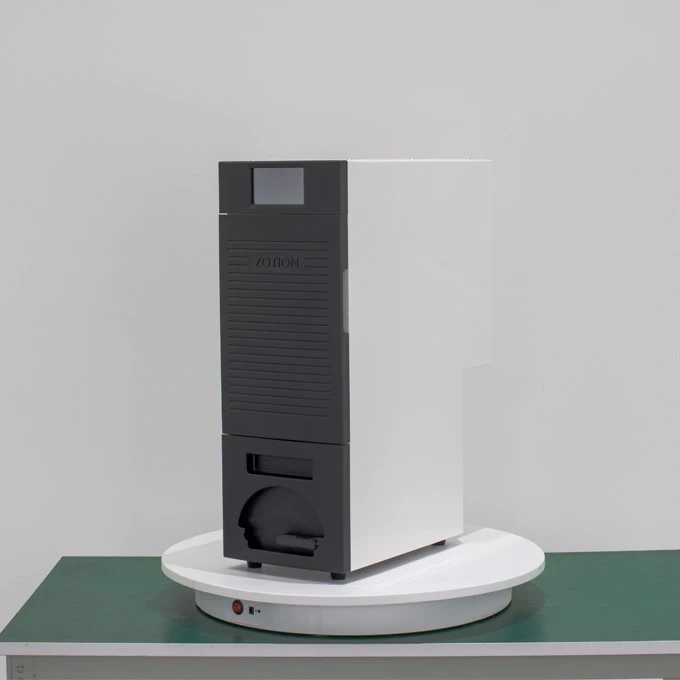
In dental CAD/CAM laboratories and equipment distribution networks, discussions often focus on milling machine specifications such as spindle speed, axis positioning accuracy, or the flexural strength of zirconia blocks. However, during installation and daily operation, technicians often find that the dust extraction system also has a major influence on how reliably a milling machine operates.
As an R&D engineer working with dental milling machines and extraction systems, I have come across a recurring problem: a laboratory invests in a high-precision 5-axis milling machine but pairs it with a general-purpose industrial vacuum cleaner purchased from a local hardware supplier.
After a period of operation, the laboratory may start reporting problems such as dust accumulation inside the milling chamber, reduced suction, clogged filters, and increased maintenance requirements. In some cases, technicians may also notice abnormal machine temperatures or axis-related alarms. These symptoms do not necessarily indicate a fault in the milling machine itself. An unsuitable extraction system may be one of the factors contributing to the problem.
For dental laboratories and equipment dealers, a milling machine is an important part of daily production, while the vacuum cleaner handles the dust generated during machining. If the two are not properly matched, dust can accumulate around mechanical components, maintenance may become more frequent, and the working environment can become less comfortable.
1. The Common Misconception: High Motor Power Does Not Mean Better Dust Extraction
One of the first questions buyers often ask is: "How many watts is the vacuum motor? Is it 2,000 W or more?"
Motor power is worth checking, but it should not be the only selection criterion. A higher wattage rating does not automatically mean that a vacuum cleaner can remove fine dental milling dust more effectively.
The reason is that dental milling waste has different characteristics depending on the material being processed.
Zirconia dust: Dry milling produces fine ceramic particles. Some of this dust can remain suspended in the air, while the rest settles on the chamber walls, protective covers, and nearby mechanical components.
PMMA chips and dust: PMMA waste is lighter than zirconia particles and can be affected by static electricity. Fine particles may cling to the inner surface of hoses and other plastic components, gradually contributing to blockages.
When selecting a vacuum cleaner, two specifications deserve particular attention: airflow and static pressure.
| Metric | Simple Explanation | Why It Matters for Dental Milling |
|---|---|---|
| Airflow (Q) | The volume of air moved over a period of time, usually measured in m³/h or CFM | Determines how much air can be drawn through the milling chamber and extraction hose |
| Static Pressure (ΔP) | The pressure difference generated by the vacuum cleaner, usually measured in kPa or mmH₂O | Indicates how well the unit can overcome resistance from hoses, bends, filters, and other parts of the extraction system |
Airflow and static pressure are related, but they describe different aspects of vacuum performance. A unit may have a high airflow rating under low resistance but perform differently once connected to a long hose, narrow extraction port, or partially loaded filter.
For this reason, buyers should pay attention to the working performance of the vacuum cleaner after it has been connected to the milling machine, rather than relying only on the figures listed in the product specifications.
A Practical Comparison of Two Extraction Configurations
In one of our laboratory comparisons, we evaluated two vacuum configurations connected to the same 5-axis dry milling machine:
Option A – High Airflow, Lower Static Pressure: A general-purpose industrial vacuum cleaner rated at 220 m³/h airflow and 12 kPa maximum static pressure. When connected through a 38 mm extraction hose, the available pressure at the milling machine inlet was considerably lower than the unit's maximum rating. Dust accumulation was observed around the X- and Y-axis protective covers and nearby guide components.
Option B – Moderate Airflow, Higher Static Pressure: A dental extraction unit rated at 160 m³/h airflow and 24 kPa maximum static pressure. Under the test conditions, it maintained more stable extraction at the milling chamber, and less dust remained inside the chamber and hose.
The comparison illustrates an important point: the vacuum cleaner's performance at the machine connection matters more than its maximum specification alone.
For a single dry milling machine, a unit with a static pressure rating in the range of 20–26 kPa may be worth considering. However, this should be treated as a reference range rather than a universal requirement. The actual selection depends on the milling machine's extraction port, hose length, filter design, and the manufacturer's recommended operating conditions.
2. Filter Design: Reducing Clogging and Controlling Fine Dust
Laboratory operators sometimes report that a new vacuum cleaner works well during the first few days, but its suction gradually decreases as the filter collects zirconia dust.
Fine ceramic particles can accumulate inside the filter material. With some conventional filters, dust penetrates into the filter media rather than remaining on the surface. This makes cleaning more difficult and can lead to a gradual increase in airflow resistance.
For dental milling applications, it is worth looking at both the primary filter and the exhaust filtration system.
Primary Filtration: PTFE-Coated Filter Media
A PTFE-coated filter is one option for handling fine dust.
Compared with some conventional filter materials, a PTFE-coated surface makes it easier for collected powder to separate from the filter during cleaning. Dust is less likely to become deeply embedded in the filter media, although the actual cleaning performance also depends on the filter structure and the cleaning method.
When comparing products, buyers should check:
Whether the filter uses PTFE-coated media.
Whether it can be cleaned manually or through an automatic cleaning system.
Whether the filter can be replaced easily.
Whether the manufacturer provides filtration efficiency data and the test conditions behind those figures.
A filtration efficiency figure such as 99.9% should not be considered meaningful without knowing the particle size, testing method, and filter configuration used to obtain it.
Secondary Filtration: HEPA Exhaust Filters
The primary filter collects most of the dust entering the vacuum cleaner. However, very fine particles may pass through the primary filtration stage, depending on its performance.
A HEPA exhaust filter can provide an additional level of filtration before the air is discharged back into the laboratory.
For example, an H13 HEPA filter is commonly rated to capture at least 99.95% of particles at its most penetrating particle size under the applicable test standard. H14 filters have a higher rated efficiency.
When choosing a vacuum cleaner, it is worth checking whether the HEPA filter is installed in the exhaust path and whether the complete unit has been tested for leakage. A HEPA filter alone does not establish the filtration performance of the entire vacuum cleaner.
A typical filtration arrangement may look like this:
Milling chamber
↓
Extraction hose
↓
Primary filter – PTFE-coated filter media
↓
Secondary filter – HEPA H13 or H14, if fitted
↓
Filtered exhaust air
The filtration arrangement, filter sealing, and maintenance schedule all affect the final result. A filter that is not installed correctly or has become damaged may allow dust to bypass the filtration system.
Static Electricity Protection
Static electricity is another issue worth considering, particularly when milling PMMA.
As PMMA chips and dust move through a hose, friction can generate static charges. Depending on the material of the hose and the grounding arrangement, particles may cling to the inner surface. Over time, accumulated material can contribute to reduced airflow or blockages.
An anti-static hose can help reduce this problem. Some hoses contain conductive materials or an embedded grounding wire, but the presence of a conductive component alone does not guarantee effective static control. The hose and extraction unit must be connected and grounded according to the manufacturer's instructions.
It is also worth separating static-related problems from electronic interference. Static discharge can create electrical interference under certain conditions, but it should not automatically be assumed to be the cause of a milling machine control-board fault. Proper grounding and electrical installation are important for both equipment safety and reliable operation.
3. Machine Integration: Coordinating the Vacuum Cleaner with the Milling Machine
A vacuum cleaner can be switched on and off manually, but this is not always the most convenient arrangement in a busy dental laboratory.
If the operator forgets to start the vacuum cleaner before milling, dust may remain inside the chamber. If the vacuum is switched off immediately after machining, some of the dust still inside the hose may settle before reaching the collection container.
A synchronized control system can help avoid these situations.
Why Automatic Start and Stop Control Is Useful
A suitable control arrangement allows the vacuum cleaner to operate according to the milling machine's working status.
There are two practical points to consider:
Starting before machining: The vacuum cleaner should start before the milling process begins. This gives the extraction system time to establish airflow inside the chamber.
Continuing after machining: The vacuum cleaner should keep running briefly after the spindle stops. This allows remaining dust to move through the hose and into the collection container.
The exact timing depends on the equipment and extraction system. For example, a pre-start interval of approximately 0.5 seconds and a post-run delay of 3–5 seconds may be used as initial reference values during commissioning. They should be adjusted according to the actual machine configuration and the manufacturer's recommendations.
Common Control Methods
Depending on the milling machine and vacuum cleaner, automatic operation can be achieved through:
Relay control: The milling machine sends a control signal to the vacuum cleaner through a compatible relay interface.
Current sensing: The vacuum cleaner detects when the milling machine starts operating and switches on automatically.
Dedicated communication or control interfaces: Some equipment uses a specific connection method provided by the manufacturer.
Before connecting the two devices, check the voltage, current rating, wiring arrangement, and control signal requirements. A 24 V DC relay output may be available on some machines, but it should not be assumed to be standard across all milling systems.
The control interface must be compatible with both devices. Incorrect wiring or an unsuitable relay can cause operating problems or damage electrical components.
4. A Practical Example: Troubleshooting Dust Extraction in a Dental Laboratory
The following example illustrates how an extraction problem can affect daily laboratory operations. The figures should be treated as case-specific observations rather than performance guarantees for every laboratory.
Laboratory Background
A medium-sized dental laboratory in Germany was operating three 5-axis dry milling machines for approximately 12–14 hours per day. The machines were used to process zirconia discs and PMMA materials.
The original extraction arrangement consisted of one central industrial vacuum cleaner connected to all three milling machines through a shared PVC ducting system.
After a period of operation, the laboratory reported several problems:
Dust accumulated around the milling chambers and protective covers.
PMMA particles collected on some internal machine surfaces and around moving components.
Operators needed to clean the machines more frequently.
The shared extraction system was relatively noisy during operation.
R&D Diagnosis
The inspection identified two main areas that needed attention.
1. Uneven extraction performance
The central vacuum cleaner supplied three milling machines through a shared ducting system. When more than one machine was operating, the available airflow at each connection could change.
The length and layout of the ducts, the number of bends, and the resistance of the filters all affected the extraction performance. As a result, the suction available at each milling machine was not always sufficient for the working conditions.
2. Filter maintenance problems
The vacuum cleaner did not have a filter-cleaning system suitable for the amount of fine dust generated during daily production. Dust gradually accumulated in the filter, increasing airflow resistance and reducing extraction performance.
Corrective Measures
The laboratory changed from the shared extraction arrangement to individual vacuum cleaners for each milling machine.
The selected units had the following specifications:
Airflow: approximately 180 m³/h.
Maximum static pressure: approximately 26 kPa.
Brushless motor.
PTFE-coated primary filter.
Automatic filter-cleaning function.
H13 HEPA exhaust filter.
The vacuum cleaners were also connected to the milling machines through compatible control interfaces, allowing them to start and stop automatically.
Results After Adjustment
| Operational Metric | Before Adjustment | After Adjustment |
|---|---|---|
| Milling chamber maintenance | Manual cleaning required approximately every 2 days | Cleaning interval extended to approximately once every 3 weeks |
| Dust-related maintenance reports | 2–3 reports per week | No dust-related reports during the 3-month observation period |
| Operating noise level | Approximately 78 dB(A) | Up to approximately 62 dB(A), under the recorded test conditions |
| Motor maintenance | Carbon brushes replaced approximately every 3 months | Brushless motor used; maintenance requirements differed from the original unit |
The comparison shows that changing the extraction arrangement can improve daily maintenance conditions. However, the results depend on the laboratory layout, machine usage, filter maintenance, and the specific equipment selected.
It is also worth noting that a brushless motor does not automatically have a service life of 20,000 hours or more. Any service-life figure should be supported by the motor manufacturer's rating and the conditions under which it was tested.
5. A Practical Selection Checklist for Dental Equipment Dealers and Laboratory Managers
When selecting a vacuum cleaner for a dental CAD/CAM milling machine, buyers should look beyond motor wattage and compare the complete extraction system.
The following points are useful during product evaluation:
Static pressure and airflow: Are the rated airflow and static pressure suitable for the milling machine? Can the supplier provide working performance data under realistic hose and filter conditions?
Port and hose compatibility: Does the hose diameter match the milling machine's extraction outlet? Common sizes include 32 mm, 38 mm, and 50 mm, but the correct size depends on the machine.
Filter design: Does the primary filter use suitable fine-dust filter media, such as a PTFE-coated filter? Is manual or automatic filter cleaning available?
Exhaust filtration: Is a HEPA filter fitted? Is there information about the filter grade, installation position, and leakage testing?
Static electricity protection: Is the hose suitable for the materials being milled? Is the grounding arrangement explained in the installation instructions?
Automatic control: Can the vacuum cleaner start and stop in coordination with the milling machine? Are the control signals and electrical connections compatible?
Noise level: What is the measured noise level, and under what operating conditions was it tested?
Maintenance and spare parts: Are replacement filters, hoses, and other consumables readily available? How often does the manufacturer recommend cleaning or replacing them?
For equipment dealers, these questions are also useful when recommending products to customers. A vacuum cleaner that works well with one milling machine may not be suitable for another model with a different extraction port, hose arrangement, or dust collection requirement.
Conclusion
A dental vacuum cleaner is more than an accessory placed beside a CAD/CAM milling machine. It is part of the overall milling setup and has a direct influence on dust removal, machine cleanliness, and routine maintenance.
When matching the two devices, buyers should consider airflow, static pressure, filter design, hose compatibility, static electricity protection, and automatic control. Looking at these factors together provides a more reliable basis for selecting an extraction system than comparing motor wattage alone.
For dental laboratories, a suitable vacuum cleaner can reduce dust accumulation and make daily cleaning easier. For distributors, understanding these specifications helps avoid recommending an extraction unit that does not match the milling machine.
The best choice is not necessarily the vacuum cleaner with the highest power rating. It is the one that works properly with the milling machine under the laboratory's actual operating conditions.