





How Does Zirconia Powder Quality Affect Dental Zirconia Blanks?
 Nov 02, 2026|

How Does Zirconia Powder Quality Affect Dental Zirconia Blanks?
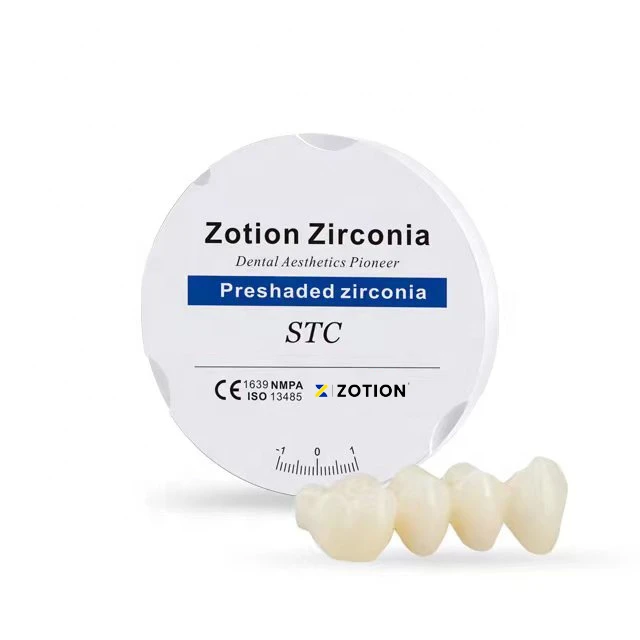
When dental laboratories purchase zirconia blanks, they usually pay attention to several specifications: zirconia type, strength, translucency, available shades, and price. These are all important factors, but there is another part of the manufacturing process that deserves attention: the quality of the raw zirconia powder.
As an R&D engineer working with zirconia materials and production equipment, I often hear questions from dental laboratory owners about why two zirconia blanks with the same nominal composition, such as 3Y or 5Y, can perform differently during milling and sintering.
The reason is not always related to the milling machine or furnace. Differences in raw material quality and manufacturing processes can also affect the final performance of zirconia blanks.
For example, a laboratory may notice that one batch of discs produces smooth crown margins, while another batch chips more easily during milling. Some discs may show slight shade differences after sintering, even when the same coloring liquid and furnace program are used.
These problems can sometimes be traced back to the characteristics of the starting powder.
In this article, we will look at how zirconia powder quality affects the production of dental zirconia blanks and what laboratories and distributors should consider when choosing a supplier.
1. Raw Material Purity: Why Does It Matter?
Zirconia powder is the main raw material used to produce dental zirconia blanks. Its chemical composition has a direct influence on the properties of the final ceramic.
Dental zirconia usually contains yttria, which helps stabilize the material and determines its phase composition. Different yttria contents are used to produce different types of zirconia, such as 3Y, 4Y, and 5Y.
However, the nominal yttria content is not the only factor that matters. The purity of the powder and the consistency of its chemical composition are also important.
The Effect of Impurities
During powder production, small amounts of other substances may remain in the material. Some of these impurities can affect the appearance and performance of the finished zirconia.
For example:
Iron-containing impurities: May contribute to unwanted yellowish or grayish discoloration, particularly when impurity levels vary between batches.
Silica: Excessive amounts may affect the grain boundaries of zirconia during sintering.
Other metallic impurities: Depending on their type and concentration, they may influence the color and microstructure of the final ceramic.
For dental laboratories, these differences may become noticeable when comparing zirconia discs from different production batches.
Imagine a laboratory using the same coloring liquid and sintering program for two batches of zirconia. If the background color of the raw material is different, the final crowns may not have exactly the same shade.
This is one reason why raw material consistency matters. A reliable zirconia manufacturer needs to control not only the main chemical composition but also the impurity levels of the powder.
2. Particle Size: How Does It Affect Sintering and Translucency?
Particle size is another important characteristic of zirconia powder.
In simple terms, the size and distribution of powder particles influence how closely they can pack together during manufacturing and how the material densifies during sintering.
If the particle distribution is unsuitable, the finished blank may have a less uniform internal structure.
What Happens When Particle Sizes Are Not Properly Controlled?
Powder with relatively large particles may require more demanding sintering conditions to achieve sufficient density.
On the other hand, very fine powder is not automatically better. Fine particles have a tendency to stick together and form clusters. If these clusters are not properly dispersed during production, small defects may remain inside the material.
These defects can affect the final appearance of zirconia.
For example, small pores inside the ceramic can scatter light and reduce translucency. A restoration may then appear less transparent than expected, even when the zirconia is sold as a high-translucency material.
Particle size also affects the sintering process. Powder with suitable particle characteristics can achieve good densification under appropriate sintering conditions. However, the final result still depends on the pressing process, sintering temperature, and holding time.
For laboratories, the important point is that powder quality and sintering parameters work together. A suitable furnace program cannot always compensate for problems caused by poor raw material preparation.
3. Granulation and Binder Quality: Why Do Some Zirconia Blanks Mill Better?
Before zirconia powder becomes a finished disc, it needs to go through several manufacturing steps.
One of these is spray drying. During this process, fine zirconia powder is processed into small granules with the help of binders and other additives.
Granulation makes the powder easier to handle and helps it flow into the pressing mold more evenly.
The quality of the granules can affect the density and strength of the pressed blank.
Why Does Granule Quality Matter?
If the granules are too hard, irregular, or unevenly distributed, they may not compact consistently during pressing.
This can result in differences in density within the zirconia disc. After sintering, areas with different densities may shrink differently, which can affect the dimensional accuracy of the final restoration.
The binder is also important. It helps hold the zirconia powder together before final sintering and gives the blank enough strength for handling and milling.
If the binder formulation is not suitable, several problems may occur:
Insufficient strength: The blank may be more likely to chip during milling, especially around thin crown margins.
Excessive softness: The material may produce sticky burrs or uneven edges during machining.
Incomplete binder removal: Residual organic materials may affect the color and appearance of the final restoration.
Of course, milling results are also influenced by the condition of the burs, machine accuracy, and milling strategy. However, the quality of the zirconia blank itself should not be overlooked.
For dental laboratories that frequently produce thin margins or complex restorations, consistent granulation and binder control are particularly worth considering.
4. Pressing Quality: Why Is Density Uniformity Important?
After granulation, zirconia powder is pressed into the required shape to produce a blank.
Many manufacturers use a combination of uniaxial pressing and cold isostatic pressing (CIP). These processes help compact the powder and improve density uniformity throughout the disc.
Why does this matter?
Because the density of the blank affects how it shrinks during sintering.
During the sintering process, zirconia becomes denser and its dimensions decrease. CAD/CAM software compensates for this shrinkage by enlarging the restoration during milling.
This compensation is based on the shrinkage factor printed on the zirconia disc.
For example, if a disc has a shrinkage factor of 1.2345, the milling software uses this value to calculate the enlarged dimensions required before sintering.
However, the printed shrinkage factor is only useful when the material shrinks consistently.
If the density is uneven across the disc, different areas may shrink at different rates. This can cause problems such as:
Crown distortion after sintering.
Poor internal fit.
Inconsistent dimensions between restorations.
Additional adjustment during clinical seating.
For laboratories producing multi-unit bridges, this issue deserves particular attention because even small dimensional differences can affect the fit of the entire restoration.
A well-controlled pressing process helps produce blanks with more uniform density and more predictable shrinkage behavior.
5. How Does Powder Quality Affect Daily Laboratory Work?
For dental technicians, raw powder quality may seem far removed from everyday production. However, its effects can appear at several stages, from milling to final inspection.
The following table summarizes some common laboratory problems and their possible material-related causes.
| Laboratory Problem | Possible Material-Related Cause |
|---|---|
| Frequent chipping around thin crown margins | Uneven granulation, insufficient blank strength, or poor binder distribution |
| Grayish or yellowish discoloration | Variations in raw material purity or background color |
| Low translucency or a milky appearance | Residual pores or an unsuitable internal structure |
| Multi-unit bridge distortion | Uneven density and inconsistent shrinkage |
| Different results between production batches | Variations in raw powder quality or manufacturing conditions |
These problems do not always come from the zirconia powder alone. Milling parameters, furnace calibration, restoration design, and technician operation also play important roles.
However, if the same problems continue to occur across different milling machines or sintering cycles, it may be worth checking the zirconia blanks themselves.
For example, if a laboratory experiences frequent margin chipping with one particular batch but not with another, comparing the blank's manufacturing consistency can help identify the cause.
6. What Should Dental Laboratories and Distributors Check When Choosing Zirconia Blanks?
When evaluating a zirconia supplier, buyers often focus on strength, translucency, and price. These specifications are useful, but they do not tell the whole story.
It is also worth asking how the manufacturer controls raw materials and production consistency.
Here are several practical questions to consider.
1. Where does the raw zirconia powder come from?
Ask whether the manufacturer uses established zirconia powder suppliers and whether incoming raw materials are inspected before production.
2. How is powder quality controlled?
A manufacturer should have procedures for checking chemical composition, purity, and particle characteristics. Consistent incoming material helps reduce differences between production batches.
3. How are the blanks pressed and formed?
Ask whether the manufacturer uses suitable pressing processes to maintain uniform density throughout the disc.
4. How is the shrinkage factor tested?
The shrinkage factor printed on the disc should be based on actual production measurements. Buyers can also ask whether the manufacturer checks shrinkage consistency between batches.
5. Does the manufacturer test finished zirconia blanks?
Useful quality checks include density, flexural strength, translucency, shade consistency, and dimensional stability after sintering.
For distributors, these questions can help distinguish manufacturers that have established quality-control procedures from suppliers that mainly compete on price.
For dental laboratories, consistent product quality is often more useful in daily production than a specification that looks attractive on a product brochure but varies between batches.
Conclusion
The quality of a dental zirconia blank starts long before the disc reaches a milling machine. Raw powder purity, particle size, granulation, binder formulation, and pressing quality all contribute to the properties of the finished material.
These factors can influence how the blank performs during milling, how it shrinks during sintering, and how the final restoration looks and fits.
For dental laboratories, understanding the relationship between raw material quality and production results can help when comparing suppliers or investigating repeated processing problems.
For distributors, it is worth looking beyond nominal zirconia composition and asking how the manufacturer controls raw materials and production batches.
A zirconia blank is more than a disc with a specified strength and translucency value. Its manufacturing consistency also plays an important role in the results that dental laboratories achieve every day.