





Who Are the Manufacturers of Dental Milling Machines?
 Sep 28, 2026|
Who Are the Manufacturers of Dental Milling Machines?
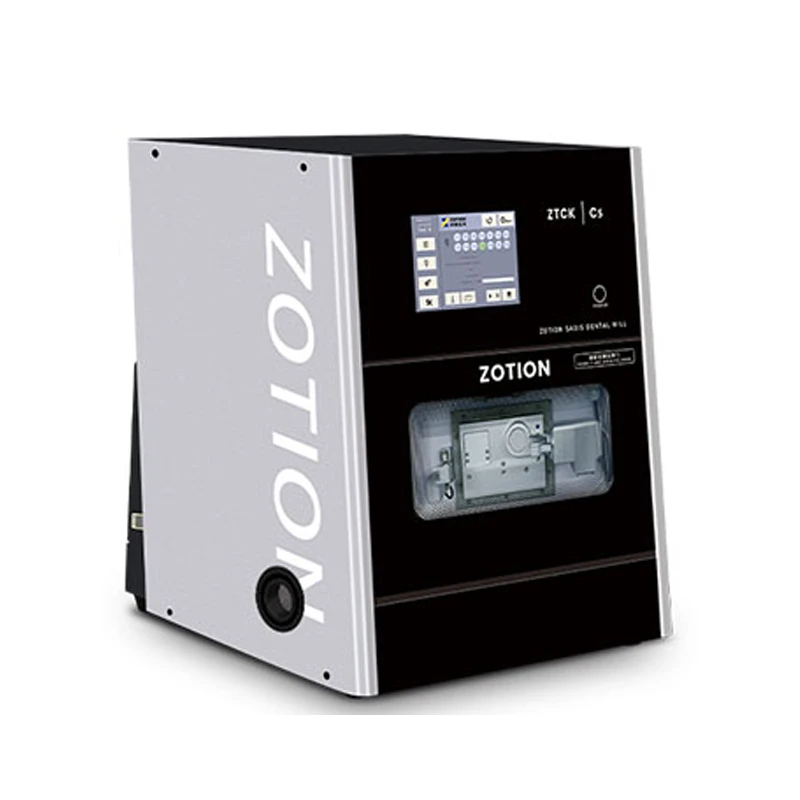
When a dental laboratory plans to invest in a CAD/CAM milling machine, one of the first questions that usually comes up is:
Which manufacturer should I choose?
The global dental milling machine market includes companies from Germany, Japan, Austria, Switzerland, the United States, South Korea, China, Turkey, and other regions.
Some manufacturers have decades of experience in dental CAD/CAM systems. Others concentrate on laboratory production, while some develop compact machines for smaller laboratories or clinics. There are also manufacturers whose products are positioned toward more cost-conscious markets.
According to industry reports, companies involved in dental milling machines include Dentsply Sirona, Amann Girrbach, Roland DG (DGSHAPE), vhf camfacture, imes-icore, Zirkonzahn, Planmeca, Ivoclar, ARUM, Yenadent, UP3D, Aidite, and other CAD/CAM equipment manufacturers.
However, one point is often overlooked when buyers compare manufacturers: a well-known name does not automatically mean that a particular machine will fit every laboratory.
A dental laboratory in Germany producing complex implant restorations may have very different requirements from a laboratory in Southeast Asia that mainly produces zirconia crowns.
A distributor selling equipment in an emerging market also has concerns that may not be relevant to a laboratory buying a single machine for its own production.
The manufacturer matters, but so does the relationship between the machine, the materials, the software, and the laboratory's actual workflow.
What Types of Companies Manufacture Dental Milling Machines?
Before comparing individual manufacturers, it is useful to understand that dental milling machine companies do not all operate in the same way.
They can generally be divided into several groups.
1. Complete CAD/CAM System Manufacturers
Some companies provide several parts of the digital dentistry workflow rather than focusing on milling machines alone.
Their product portfolios may include:
scanners
CAD software
CAM software
milling machines
materials
service networks
Examples include companies such as:
Dentsply Sirona
Amann Girrbach
Ivoclar
Planmeca
Straumann-related CAD/CAM solutions
These companies generally place considerable emphasis on workflow integration.
For a laboratory, using equipment and software from one ecosystem can reduce the number of different systems operators have to learn and maintain.
At the same time, not every laboratory wants a closed or highly integrated workflow.
Some laboratories already have established suppliers for zirconia, PMMA, scanners, or CAM software. For these users, compatibility with existing equipment can be more relevant than having every part of the workflow from one manufacturer.
For this reason, the first question is not simply whether a manufacturer offers a complete system. It is whether that system fits the laboratory's existing production setup.
2. Specialized Milling Machine Manufacturers
Another group consists of companies that concentrate more heavily on milling technology and related equipment.
Examples include:
vhf camfacture
imes-icore
Roland DG / DGSHAPE
Zirkonzahn
For these manufacturers, milling equipment is a major part of their business and technical development.
When laboratories compare this type of manufacturer, they may spend more time looking at the machine itself, including:
mechanical construction
machine stability
expected service life
maintenance requirements
software compatibility
supported materials
These details can have a direct effect on daily production.
For example, a laboratory that mills zirconia throughout the day may have different concerns from one that uses its machine only for occasional PMMA or wax work. The number of units produced, material selection, and maintenance schedule all affect how the machine should be evaluated.
3. Regional CAD/CAM Manufacturers
Manufacturers from China, South Korea, Turkey, and other regions have also become increasingly active in the dental CAD/CAM market.
Examples include:
UP3D
Aidite
Yucera
Zotion
ARUM
Their products may compete in areas such as:
equipment pricing
communication speed
configuration flexibility
OEM cooperation
distributor partnerships
For overseas distributors, this group can provide additional options when developing a dental CAD/CAM product line.
The manufacturing country itself, however, does not tell a buyer everything about a machine.
A distributor or laboratory still needs to ask practical questions:
Is the machine stable during regular production?
Are spare parts available?
How is technical support handled?
Does the manufacturer provide product training?
Can the machine work with the materials and software used by local customers?
These questions give a clearer picture of the manufacturer than the country name alone.
Major Dental Milling Machine Manufacturers
vhf camfacture AG (Germany)
vhf camfacture AG is a well-known manufacturer in dental milling technology.
The company focuses on dental milling machines and related CAD/CAM production solutions. Its range includes machines for different laboratory environments, from more compact systems to larger production equipment.
vhf machines are widely used in dental laboratories for applications including dry milling of materials such as zirconia and PMMA.
The company's background in precision mechanical engineering is also relevant when considering its approach to milling equipment.
For a laboratory evaluating a vhf machine, the manufacturer's reputation is only one part of the assessment. It is also worth checking:
local service availability
software compatibility
spare parts costs
maintenance requirements
A machine can be technically capable, but the practical experience may still depend heavily on how service and spare parts are handled in the buyer's region.
imes-icore GmbH (Germany)
imes-icore GmbH develops dental CAD/CAM milling systems under the CORiTEC product family.
Its equipment is used in dental practices, laboratories, and milling centers. The product range covers compact systems as well as larger production machines.
One feature of the company's product range is the variety of machine sizes and configurations.
A small laboratory may have limited production volume and prefer a compact system, while a milling center may require higher capacity and a different machine configuration.
For this reason, looking at the manufacturer's complete product range can sometimes provide more useful information than comparing one model in isolation.
Amann Girrbach AG (Austria)
Amann Girrbach AG is another established name in dental CAD/CAM.
The company is known for the Ceramill system, which covers various parts of digital laboratory production.
Its solutions include areas such as scanning, design, milling, and workflow management.
For laboratories already using Ceramill equipment or software, compatibility within the same system may be a practical consideration.
For laboratories comparing several manufacturers, however, other factors still need to be examined, including:
material compatibility
machine maintenance
software costs
training requirements
service response time
An integrated system may simplify certain parts of production, but the usefulness of that integration depends on how the laboratory actually works.
Roland DG / DGSHAPE (Japan)
Roland DG Corporation entered the dental milling field through its DGSHAPE business.
The company is known for compact CAD/CAM milling machines, including the DWX series.
Roland DG has a background in digital manufacturing technology beyond dentistry, which is also part of the company's broader technical history.
When looking at a manufacturer with experience in digital fabrication and machining, buyers may examine areas such as:
machine control
mechanical construction
operator experience
maintenance
support in the target market
These factors can be more useful for a laboratory than simply looking at the manufacturer's name.
Dentsply Sirona (United States)
Dentsply Sirona is a major dental technology company with CAD/CAM products for both clinical and laboratory applications.
The company is widely associated with the CEREC digital dentistry system, which has been used in dentistry for many years.
For clinics and laboratories that prefer an integrated digital workflow, compatibility between different parts of the system can be an important consideration.
Laboratories that purchase materials, software, and equipment from different suppliers may instead place greater emphasis on open compatibility.
The distinction matters because two laboratories can purchase milling machines for completely different reasons, even when both are producing dental restorations.
Zirkonzahn (Italy)
Zirkonzahn is known in the dental industry for its zirconia and CAD/CAM solutions.
The company has developed milling systems, software, and related solutions for zirconia-based dental production.
Zirconia production involves more than the milling stage. The material selected, milling strategy, sintering process, and final restoration requirements all interact with one another.
For laboratories that produce a large proportion of zirconia restorations, a manufacturer's experience with this workflow can therefore be relevant when comparing equipment.
ARUM Dentistry (South Korea)
ARUM Dentistry focuses on dental milling technology.
Its machines are used in dental laboratories for different materials and production applications.
South Korean companies have become increasingly visible in international dental CAD/CAM markets, adding another group of manufacturers for laboratories and distributors to consider.
For buyers, the same basic questions still apply: what materials can the machine process, how is it supported, and does its configuration fit the intended production environment?
UP3D, Aidite, ZOTION, and Other Chinese Manufacturers
China has become an important manufacturing base for dental CAD/CAM equipment.
Chinese companies now produce products in several areas, including:
dental milling machines
zirconia materials
scanners
furnaces
CAD/CAM accessories
Companies such as UP3D and Aidite have expanded their presence in overseas markets through distributors and direct international sales.
Chinese manufacturers may attract overseas buyers because of factors such as:
equipment pricing
configuration flexibility
communication
OEM opportunities
However, these factors should not replace technical evaluation.
When a distributor or laboratory visits a factory or evaluates a supplier, it is useful to look beyond the finished machine.
Areas worth discussing include:
engineering capability
production processes
quality control
testing procedures
export experience
after-sales support
A manufacturer's actual production and support capabilities are more informative than its country of origin alone.
What Should a Dental Laboratory Check When Choosing a Manufacturer?
Many buyers begin with a simple question:
"Which brand is famous?"
From a manufacturing perspective, there are several other questions that can give a more useful answer.
1. Does the Manufacturer Understand Dental Production?
A general CNC machine manufacturer and a dental milling machine manufacturer are not exactly the same.
Dental restoration production has its own technical requirements, including:
small restoration geometries
thin margins
material behavior
CAM compensation
dental application requirements
A manufacturer needs to understand the machining process as well as the characteristics of dental production.
For example, the requirements for milling a small crown margin are different from those for machining a larger industrial component. Tool selection, machine movement, CAM parameters, and material behavior all affect the final result.
2. How Many Machines Are Installed Worldwide?
The number of installed machines can provide some information about a manufacturer's market experience.
A manufacturer should be able to discuss:
the approximate number of installed machines
major markets
distributor coverage
common customer applications
The type of installed base also matters.
A manufacturer may have many machines in one market but limited experience in another. Service expectations, spare-parts logistics, training, and communication can vary between regions.
For example, a laboratory in Europe may have different service requirements from one in Africa or South America.
A distributor should therefore ask whether the manufacturer has experience supporting customers in the specific market where the machines will be sold.
3. What Technical Support Is Available?
A milling machine is production equipment, so technical support becomes relevant as soon as the machine is installed.
If a machine stops during production, the laboratory may have difficulty completing customer orders.
Before purchasing, buyers can ask:
How is technical support provided?
Is support remote, onsite, or both?
What is the usual response time?
Are technical manuals available?
Are spare parts stocked?
Is operator training provided?
These questions are particularly useful for overseas purchases because the factory and the end user may be thousands of kilometers apart.
A distributor may also need a different level of support from an individual laboratory. If the distributor has its own service team, for example, the manufacturer may need to provide technical training and documentation for that team.
4. Does the Manufacturer Have Its Own Factory?
This question is particularly relevant to distributors.
Some companies design and manufacture their own machines. Others use OEM production for some or all of their equipment.
Neither business model automatically determines the quality of the final machine.
What matters is whether the responsibilities are clear.
A distributor should understand:
Who controls production?
Who performs quality inspection?
Who provides technical support?
Who supplies spare parts?
Who handles warranty issues?
When several companies are involved in production and sales, unclear responsibilities can make technical problems harder to resolve.
5. Can the Manufacturer Provide Real Production Data?
A manufacturer should be able to discuss practical information rather than relying only on general statements about machine performance.
Depending on the machine, useful information may include:
milling time examples
material testing
spindle specifications
accuracy testing
machine calibration
maintenance records
For example, instead of simply saying:
"Our machine has high precision."
A more useful technical explanation would describe:
how the accuracy is tested
under what conditions
which material is used
which measurement method is applied
This gives the buyer a way to understand what the specification actually means.
For a laboratory, a machine specification without a testing method can be difficult to interpret.
How Should Distributors Choose a Dental Milling Machine Manufacturer?
Distributors have concerns that are different from those of laboratories.
A laboratory buys a machine mainly for its own production.
A distributor has to consider the machine as part of a product and service business.
Several areas deserve attention.
Product Positioning
Can the distributor clearly identify the intended customer?
For example:
small laboratory
large milling center
dental clinic
educational institution
Different users may need different machine sizes, materials, automation levels, and price ranges.
A distributor that cannot clearly define the target application may find it difficult to explain the machine to potential customers.
Market Support
The manufacturer may also need to support the distributor with:
product training
technical documents
product videos
marketing materials
spare parts
troubleshooting support
For an overseas distributor, these materials can be useful because the distributor may be responsible for introducing the machine, training users, and handling first-line technical questions.
Stability of Cooperation
A distributor usually spends considerable time developing a market.
As a result, the commercial relationship with the manufacturer can be as relevant as the machine itself.
Before cooperation begins, distributors may want to clarify:
Will the manufacturer sell directly to customers in the same market?
Is there any territory protection?
How are warranty claims handled?
How quickly can spare parts be supplied?
Who handles technical problems after installation?
These details are easier to resolve before a sales network has been established than after problems occur.
Why Brand Name Is Not the Only Factor
Brand recognition has a place in dental CAD/CAM purchasing.
A well-known manufacturer may have:
an established user base
existing service networks
more market recognition
a longer track record in the industry
At the same time, brand recognition does not answer every technical or commercial question.
A laboratory still needs to compare:
workflow compatibility
production requirements
service availability
total ownership cost
technical support
material requirements
maintenance arrangements
For example, a small laboratory producing mainly zirconia crowns may not need the same machine configuration as a large production center working with several materials every day.
The machine should be assessed in relation to the work it will actually perform.
Final Thoughts
So, who are the manufacturers of dental milling machines?
There is no single answer.
The global market includes established European manufacturers such as vhf, imes-icore, and Amann Girrbach; Japanese companies such as Roland DG; large dental technology groups such as Dentsply Sirona; and manufacturers from China, South Korea, and other regions.
Each company has its own technical background, product range, manufacturing approach, and target market.
For a dental laboratory, the useful question is not simply:
"Which brand is the most famous?"
It is also worth asking:
"Which manufacturer can provide the machine, technical support, training, spare parts, and workflow compatibility that our production actually requires?"
For distributors, the questions go further:
"Can this manufacturer support our market after the sale? Can we obtain technical assistance, spare parts, training, and reliable communication when our customers need them?"
A dental milling machine is a long-term production investment. The machine itself is only one part of that investment. The manufacturer's engineering capability, production process, service system, spare-parts supply, training, and communication can all affect the experience after installation.