





Is PMMA Good for Dental Implants?
 Sep 28, 2026|
Is PMMA Good for Dental Implants?
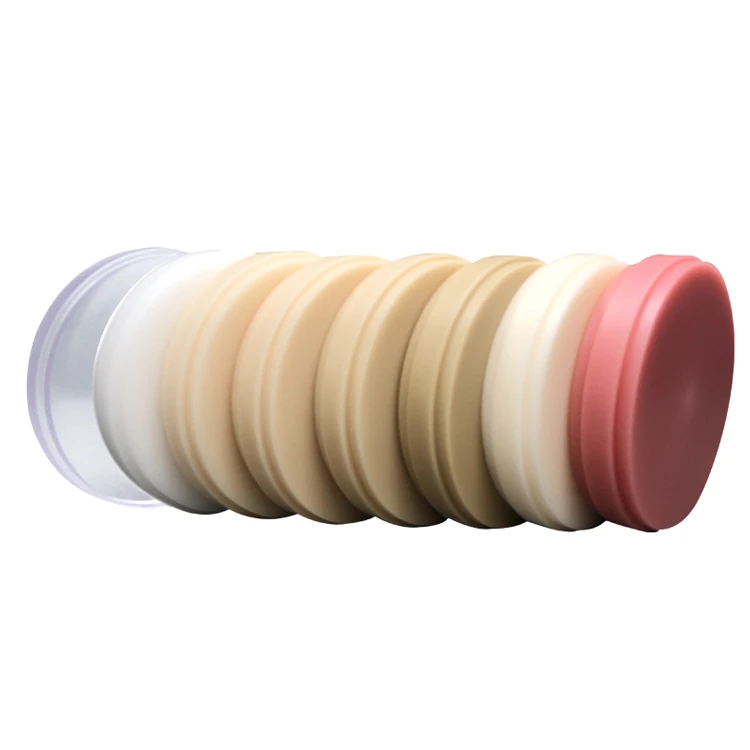
When a dental laboratory or distributor asks whether PMMA is good for dental implants, there is one point that should be clarified first:
Are we talking about the implant itself, or the restoration supported by the implant?
These are two very different questions.
PMMA, or polymethyl methacrylate, is commonly used in implant dentistry for provisional crowns, provisional bridges, and full-arch implant-supported interim restorations. It can also be used as part of a digitally produced provisional restoration during the healing and treatment-evaluation period.
It is not, however, the material normally used to make the part of the implant that is surgically placed into the jawbone.
The implant fixture and the prosthetic restoration have different jobs. The fixture is placed in the bone, while the restoration sits above the implant and replaces the visible tooth structure.
So when someone asks, "Is PMMA good for dental implants?", a more accurate question is:
Is PMMA a suitable material for an implant-supported restoration?
In many provisional situations, the answer can be yes.
The answer depends largely on what type of implant restoration is being made, how long it will be used, how it is designed, and what the specific PMMA product is indicated for.
That distinction matters to both dental laboratories and distributors.
PMMA is usually used above the implant, not as the implant fixture
A dental implant system normally contains several components.
The implant fixture is placed into the bone.
An abutment or another connection component links the implant to the prosthetic restoration.
The visible crown, bridge, or full-arch prosthesis is then attached to this system.
PMMA can be used for the prosthetic part, especially when the restoration is intended to be provisional.
For example, a CAD/CAM workflow may produce a PMMA crown that is connected to a titanium base or another metal component.
In one published technique for an immediately restored single implant, the provisional crown was milled from a PMMA block, while a titanium insert was used at the implant connection. The PMMA did not directly form the implant-to-bone component. The provisional was then maintained for at least three months while osseointegration and soft-tissue healing were assessed.
This distinction is easy to overlook.
A buyer who says "PMMA implant" may actually mean an implant-supported PMMA provisional crown.
Those are not the same thing.
Why is PMMA used for implant provisionals?
Implant treatment often involves a period between implant placement and the definitive restoration.
During that period, the patient may still need a functional and acceptable restoration, depending on the treatment plan.
PMMA can be useful because the laboratory can produce the restoration relatively quickly and make adjustments when necessary.
The provisional also gives the dentist an opportunity to observe the patient's oral condition before the definitive prosthesis is completed.
For example, the clinician may want to evaluate:
tooth position;
crown contour;
occlusal contacts;
appearance;
phonetics;
soft-tissue contour;
patient comfort;
the relationship between the implant restoration and neighboring teeth.
A digital PMMA provisional can also preserve the design data.
If the provisional shape works well, the digital file can be used as a reference when the definitive restoration is produced.
This can be useful in implant cases where the emergence profile and soft-tissue contour have been developed gradually.
PMMA and the implant healing period
The healing period is one of the main reasons PMMA is used in implant dentistry.
After implant placement, the implant needs to establish a stable relationship with the surrounding bone.
The prosthetic design and loading protocol are part of the clinical treatment plan.
In some treatment approaches, implants are loaded immediately or very early. In others, the clinician allows a healing period before placing the definitive restoration.
When an immediate or early provisional is used, the PMMA restoration becomes part of a more demanding clinical situation.
The goal is not simply to produce a crown that looks good.
The restoration also needs to be designed and adjusted according to the clinical loading protocol.
A poorly designed provisional can create problems even if the PMMA itself has good laboratory test results.
For this reason, I would not evaluate an implant PMMA restoration by material strength alone.
Can PMMA be used for immediate loading?
It can be used in some immediate-loading workflows, particularly for full-arch provisional restorations.
But this does not mean that every PMMA disc can be used for immediate loading.
The clinical protocol, implant stability, prosthetic design, connection system, and material indication all matter.
A published prospective pilot study followed ten patients receiving full-arch immediate-loading treatment using digitally prefabricated PMMA provisional prostheses.
The study involved 55 implants.
The PMMA prostheses were milled before surgery and connected to titanium copings after implant placement.
During the reported one-year functional loading period, the researchers reported no prosthesis fracture and no screw loosening at the first removal after osseointegration. One implant failed during the study, leaving an implant survival rate of 98.18% (54/55). Mean marginal bone loss after one year was reported as 0.37 ± 0.06 mm.
These are useful clinical data, but they need to be read carefully.
It was a small pilot study involving ten patients.
It does not prove that every PMMA provisional can safely carry immediate loading for one year.
Instead, it shows that, under the specific surgical, prosthetic, and material conditions used in that study, a digitally prefabricated PMMA provisional could function during a long provisional period.
That is a more appropriate way to interpret the clinical evidence.
What about single implant crowns?
Single implant cases are another common application.
A PMMA provisional crown can be used while the implant and surrounding tissues are being evaluated.
In the anterior region, the provisional can also help establish the shape of the soft tissue around the implant.
For this reason, the provisional is not simply a cheap temporary version of the final crown.
The dentist may intentionally use the provisional to develop and evaluate the final emergence profile.
Suppose the final crown will have a relatively narrow cervical contour.
The provisional can be adjusted gradually to establish the desired tissue shape.
If the soft-tissue contour is not satisfactory, changes can be made before the final restoration is manufactured.
From the laboratory side, this means that the PMMA provisional should be designed with the clinical objective in mind.
A crown that is mechanically strong but has an unsuitable emergence profile is not necessarily a successful implant provisional.
PMMA for implant-supported bridges
PMMA can also be used for implant-supported provisional bridges.
Here, the mechanical requirements increase because several implants may be connected through one prosthesis.
A three-unit implant provisional and a full-arch implant provisional should not be treated as the same application.
As the span becomes longer, the restoration can experience more complex loading.
The connector regions, cantilever length, framework design, and occlusion all become more important.
For this reason, the laboratory should pay attention to the manufacturer's recommended minimum thicknesses and design parameters.
If a supplier only provides a statement such as "suitable for implant bridges," I would ask for more detail.
For example:
What span was tested?
Is a cantilever permitted?
What is the recommended connector dimension?
Is the material intended for temporary use only?
Is the indication different for tooth-supported and implant-supported bridges?
These questions can help prevent a material from being used outside its intended application.
Full-arch implant provisionals are a different situation
One of the more demanding applications of PMMA in implant dentistry is the full-arch provisional.
A full-arch restoration can connect several implants and replace an entire arch of teeth.
The amount of material is much greater than in a single crown, and the loading pattern can be more complicated.
A patient may also use the provisional for several months.
For these reasons, material consistency and restoration design become more important.
A clinical study published recently evaluated milled PMMA and a 3D-printed hybrid ceramic resin for complete-arch implant-supported interim restorations.
The study included 20 edentulous patients.
Each patient received both types of restoration in a randomized crossover design, with each restoration used for three months.
The researchers reported mechanical complications in 2 of 20 PMMA restorations (10%), compared with 9 of 20 3D-printed restorations (45%).
The difference was statistically significant in that study, with p = 0.016.
Passive fit did not show a significant difference between the two materials.
For laboratories, this is a useful example because it shows that the manufacturing method can affect the result.
It also shows why it is risky to say:
"All resin restorations are basically the same."
They are not.
The polymer formulation, manufacturing route, and post-processing can all change the final restoration.
At the same time, this was a specific comparison over three months. It should not be used to claim that milled PMMA is always superior to every 3D-printed resin in every implant application.
Does PMMA affect osseointegration?
This is another question that comes up frequently.
The short answer is that the PMMA provisional restoration is not normally the material responsible for direct bone integration.
Osseointegration occurs at the implant-bone interface.
The PMMA restoration sits above that interface.
However, the restoration can still influence the clinical situation indirectly through loading.
This matters particularly during immediate loading.
Excessive movement or inappropriate occlusal loading can create problems during the healing period.
So when evaluating PMMA for implant cases, it is not enough to ask:
"Is PMMA biocompatible?"
The more useful questions are:
How is the restoration connected to the implant system?
How is the occlusion controlled?
What is the restoration design?
Is the provisional rigid enough for the intended application?
Is the material indicated for this duration of use?
How are the implants distributed?
Is there a cantilever?
What is the patient's loading condition?
The material is only one part of the system.
PMMA does not replace titanium at the implant connection
This point is especially important for buyers who are new to implant prosthetics.
PMMA is a relatively soft polymer compared with titanium.
A screw-retained implant restoration normally requires a precisely manufactured connection component.
In many workflows, a titanium base, titanium coping, or similar metal component provides the direct connection to the implant system, while PMMA forms the visible provisional structure.
This arrangement can be seen in published clinical techniques.
For example, one single-implant PMMA provisional technique used a titanium insert at the implant connection rather than relying on PMMA itself as the connection surface.
From a manufacturing perspective, the reason is straightforward.
The implant connection has very tight dimensional and mechanical requirements.
The PMMA provides the crown or prosthetic body.
The titanium component provides the implant interface.
These materials are doing different jobs.
Why not make the entire implant restoration from metal?
Metal can provide high mechanical strength, but an implant provisional has other requirements.
The restoration may need to be adjusted, repaired, reshaped, or replaced during treatment.
PMMA is relatively easy to modify.
Suppose a dentist discovers that the occlusal contact is too heavy.
The PMMA can be adjusted.
Suppose the emergence profile needs modification.
The provisional can be reshaped.
Suppose the patient does not like the tooth length.
The design can be modified and another provisional can be milled.
This flexibility is one reason PMMA remains useful even when the definitive restoration will eventually be made from a different material.
Can PMMA be used as the final implant crown?
This question needs more caution.
Some high-performance polymer materials are indicated for longer-term or definitive dental applications, but a generic PMMA statement should not be extended to every product.
A PMMA disc intended for provisional use should be treated as a provisional material unless the manufacturer has obtained the relevant indication for a definitive application.
The laboratory should check:
the manufacturer's intended use;
instructions for use;
regulatory status;
mechanical data;
clinical evidence;
recommended duration;
connection design;
applicable standards.
A high flexural-strength number alone does not change the product's indication.
Distributors should pay particular attention to this point.
If a customer asks:
"Can I use this PMMA permanently on implants?"
the answer should come from the product documentation and regulatory indication, not from the word "PMMA."
What does clinical evidence say about PMMA implant provisionals?
There is some useful clinical evidence, but it is still not enough to make broad statements about every PMMA product.
A systematic review of CAD/CAM implant-supported restorations published in 2015 found survival rates between 92% and 100% across the included studies, with observation periods of one to ten years. However, the review also emphasized the limited amount of high-quality long-term evidence, particularly for follow-up beyond five years.
That review was not exclusively about PMMA provisionals, so it should not be interpreted as a PMMA-specific survival rate.
More recent clinical studies provide more direct examples.
For instance, the one-year full-arch PMMA study mentioned earlier involved 55 implants and reported no provisional prosthesis fracture during the functional loading period.
Another recent clinical study evaluated 72 immediate fixed interim complete-arch prostheses supported by 432 implants in 56 patients over three months. Only two implant failures were reported during the study period.
Again, these studies do not mean that a particular PMMA disc is guaranteed to perform in the same way.
They show that PMMA can function as an implant-supported provisional material under controlled clinical protocols.
What is the biggest risk with PMMA on implants?
From a laboratory perspective, one of the biggest mistakes is to treat the material and the restoration design as separate issues.
Imagine two laboratories use the same PMMA disc.
Laboratory A produces a well-supported full-arch provisional with appropriate thickness, carefully positioned implant connections, and controlled occlusion.
Laboratory B produces a thin restoration with a long cantilever and insufficient connector dimensions.
The material is identical.
The clinical risk is not identical.
Material selection cannot compensate for poor prosthetic design.
The reverse is also true.
A good digital design cannot completely compensate for a material that is unsuitable for the intended loading condition.
Both parts have to work together.
Does milling PMMA make a difference?
It can.
A milled PMMA disc is manufactured from pre-polymerized material.
That is different from making a provisional directly by mixing powder and liquid chairside or in the laboratory.
A recent in-vitro study compared conventional direct PMMA provisional crowns with CAD/CAM-milled PMMA crowns.
The study used 60 extracted premolar teeth, with 30 crowns in each group.
The mean fracture resistance was reported as approximately 384 N for the conventional group and 906 N for the CAD/CAM-milled group.
This is a large difference.
But there is an important limitation: it was an in-vitro study involving a particular conventional PMMA system and a particular CAD/CAM material.
The result should not be interpreted as "all milled PMMA is 2.4 times stronger than all conventional PMMA."
What it does show is that the manufacturing route can significantly influence the mechanical behavior of a provisional restoration.
For laboratories considering CAD/CAM PMMA for implant provisionals, this is useful information to consider.
What about 3D-printed PMMA?
This is another area where terminology can cause confusion.
A milled PMMA disc and a 3D-printing resin may both be described as polymer-based dental materials, but they are manufactured differently.
The milled disc is already polymerized before machining.
The printable material is deposited and polymerized layer by layer.
Recent clinical evidence shows that these different manufacturing routes can produce different mechanical outcomes.
In the randomized crossover trial mentioned above, milled PMMA had fewer mechanical complications than the tested 3D-printed hybrid ceramic resin over three months: 10% versus 45%.
Another in-vitro study of implant-supported PMMA provisional crowns compared CAD/CAM milling, 3D printing, and conventional self-curing fabrication. Interestingly, that particular study found that the 3D-printed group had the highest average fracture resistance, followed by CAD/CAM milling, with conventional self-curing PMMA showing the lowest value.
Why are the results different?
Material formulation, printer parameters, post-curing, specimen design, and test methods can all affect the results.
For this reason, a buyer should not reduce the question to:
"Is milled PMMA always stronger than printed resin?"
The answer depends on the actual materials and manufacturing conditions being compared.
How long can an implant-supported PMMA provisional last?
There is no single answer.
The intended service period depends on:
product indication;
restoration design;
implant distribution;
occlusion;
loading protocol;
patient habits;
restoration span;
cantilever;
material formulation;
clinical monitoring.
Published cases and studies have reported PMMA implant provisionals functioning for several months and, in some specific protocols, around one year.
But a laboratory should not convert this into a universal rule such as:
"PMMA can last one year on every implant case."
That would be too broad.
A product intended for a short provisional period should be used according to its documented indication.
What should a laboratory check before buying PMMA for implant work?
For implant applications, I would use a stricter checklist than for ordinary temporary crowns.
1. Intended indication
Is the PMMA intended for:
implant-supported crowns?
implant-supported bridges?
full-arch provisionals?
immediate-loading protocols?
long-term provisional use?
These are different applications.
2. Recommended thickness
Ask for the manufacturer's recommended minimum thickness.
The required thickness becomes more significant as the restoration span increases.
3. Connector requirements
For bridges and full-arch restorations, ask about connector dimensions.
Do not assume that the same dimensions used for a tooth-supported provisional are appropriate for an implant-supported restoration.
4. Cantilever limitations
If the restoration contains a cantilever, ask whether the manufacturer provides specific guidance.
This is not a detail I would ignore.
5. Connection components
Check whether the PMMA is intended to be used with:
titanium bases;
titanium copings;
prefabricated interfaces;
custom components.
The connection system is part of the restoration.
6. Milling compatibility
Confirm the disc dimensions and holder system.
A laboratory should also check the recommended milling strategy.
7. Clinical evidence
If the supplier makes claims about implant applications, ask what evidence supports those claims.
A published clinical study is more informative than a sentence in a brochure.
8. Regulatory documentation
The product's regulatory status should match the intended market and application.
This matters especially for distributors.
A simple example for a distributor
Imagine a distributor receives two PMMA products.
Product A is advertised as:
"High-strength PMMA for temporary crowns."
Product B is advertised as:
"PMMA for implant-supported provisional restorations."
A customer wants material for a full-arch immediate-loading case.
Product A might have excellent mechanical data.
But the distributor should not automatically recommend it.
The first question should be whether the manufacturer has actually indicated Product A for that application.
If the answer is no, a higher strength value does not solve the problem.
This is one of the main differences between selling a material and supplying a dental material responsibly.
What should manufacturers provide?
From an R&D perspective, a useful PMMA implant product should come with more information than simply:
"Flexural strength: XX MPa."
For implant applications, laboratories need information about the intended use and processing conditions.
A technical package should ideally explain:
approved indication;
recommended restoration types;
minimum thickness;
connector dimensions;
milling parameters;
recommended polishing method;
compatible implant interfaces, where applicable;
storage conditions;
shelf life;
batch traceability;
relevant testing;
regulatory documentation.
This information helps the laboratory use the material within its intended range.
Does a higher strength PMMA always mean a better implant provisional?
Not necessarily.
A material can have high strength but still be difficult to mill.
It can be mechanically strong but difficult to polish.
It can machine well but have poor shade stability.
It can have good laboratory data but be indicated only for a short provisional period.
For an implant-supported restoration, the laboratory needs to consider both material properties and workflow.
This becomes especially noticeable in full-arch cases.
A restoration may require many hours of design, milling, finishing, connection adjustment, and clinical verification.
A material that saves ten dollars per disc but creates repeated remakes is not necessarily economical.
A practical cost example
Consider a laboratory producing 30 implant provisionals per month.
Suppose PMMA A costs $15 per disc and PMMA B costs $18.
The difference is $3 per restoration.
For 30 restorations:
30 × $3 = $90 per month.
Now imagine PMMA B reduces finishing and adjustment time by 10 minutes per restoration.
That represents:
30 × 10 = 300 minutes
or 5 technician hours per month.
If the laboratory's internal technician cost is $25 per hour, those five hours represent:
5 × $25 = $125.
The material that costs $3 more could actually produce a lower total processing cost.
These numbers are only a working example.
A real laboratory should use its own labor rate and production data.
The point is that material cost should not always be considered separately from processing time and remake rates.
What PMMA is good at in implant dentistry
If I had to describe PMMA's role from a manufacturing perspective, I would not call it an "implant material" in the same way as titanium.
I would describe it as a prosthetic material that can be very useful for implant-supported provisional restorations.
Its practical advantages include:
relatively straightforward CAD/CAM processing;
easy adjustment;
easy polishing;
ability to reproduce digital designs;
useful aesthetic properties;
suitability for many provisional applications;
availability in different shades and disc formats;
relatively simple replacement or modification during treatment.
These characteristics explain why PMMA remains common in implant provisional workflows.
Where PMMA needs more caution
The material should be evaluated more carefully when the case involves:
very long spans;
large cantilevers;
high occlusal loading;
bruxism or strong parafunctional activity;
inadequate restoration thickness;
insufficient connector dimensions;
extended service periods;
indications outside the manufacturer's instructions.
This does not mean PMMA cannot be used in such cases.
It means that the clinical and technical requirements become more demanding.
A laboratory should not rely on the material name alone.
Is PMMA good for dental implants? The practical answer
If the question means:
"Can PMMA be used as the implant fixture placed into bone?"
That is not the normal application being discussed in modern implant dentistry.
If the question means:
"Can PMMA be used for an implant-supported provisional restoration?"
Yes. It is an established application, particularly for provisional crowns, bridges, and full-arch restorations.
Clinical studies have reported successful use of milled PMMA in implant-supported provisional workflows, including immediate-loading and longer provisional periods. One study followed 55 implants with digitally prefabricated PMMA full-arch provisionals for one year without a reported provisional fracture. Another recent randomized crossover study found 10% mechanical complications in milled PMMA full-arch provisionals over three months.
But those numbers should not be turned into a promise for every case.
The final result depends on the material, restoration design, implant system, loading protocol, manufacturing process, and clinical conditions.
That part can easily be missed when PMMA is discussed only as a material.
Final thoughts from an R&D perspective
When a dental laboratory asks us whether PMMA is suitable for implant work, I would not answer simply with "yes."
I would first ask:
What implant restoration are you making?
Is it a single provisional crown?
A three-unit bridge?
An implant-supported full arch?
Is it going to be used for three months?
Six months?
Longer?
Will it be immediately loaded?
Is there a cantilever?
What connection system are you using?
These questions tell us much more than the word "implant."
PMMA has a useful place in implant dentistry because it gives laboratories a workable material for the provisional stage. It can be milled from a pre-polymerized blank, adjusted when the clinical situation changes, and replaced or modified before the definitive restoration is delivered.
The material itself, however, is only one part of the result.
A well-made PMMA disc cannot compensate for poor implant positioning, an unsuitable prosthetic design, or excessive loading. In the same way, a good digital design cannot make an unsuitable material appropriate for an application outside its indication.
For laboratories and distributors, the safest way to evaluate PMMA for implant dentistry is to start with the restoration and clinical purpose, then work backward to the material.
That usually leads to a much more useful question than "Is PMMA good for dental implants?"
The better question is:
"Which PMMA, for which implant restoration, for how long, and under what loading conditions?"
That is where the real material-selection decision begins.