





The Facts About All Porcelain and Cubic Zirconia Crowns
 Jun 04, 2018|
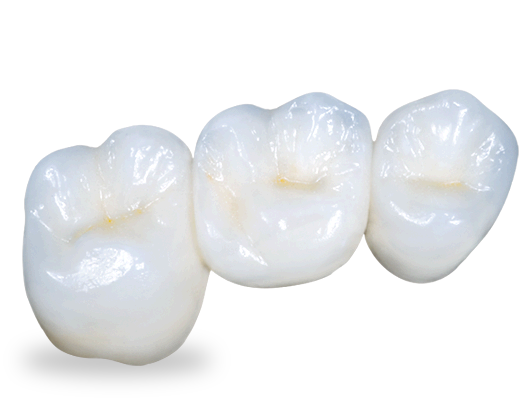
The Facts About All-Porcelain and Cubic Zirconia Crowns
Dental crowns-commonly known as "caps"-represent the gold standard in strength and durability for tooth restorations. By completely encasing weakened or damaged teeth, they eliminate structural weak points and significantly reduce the risk of further breakage. While not indestructible, modern dental crowns offer exceptional reliability, making them a cornerstone of restorative dentistry. Global dental market data shows all-ceramic crown orders keep climbing year by year, PFM porcelain-fused-to-metal products see steady market shrinkage across Europe, North America and Southeast Asia, more clinics phase out metal-based crowns to match updated patient consumption preference.
Evolution of Crown Materials
Over the past decade, crown materials have evolved dramatically. For many years, porcelain fused to metal (PFM) was the standard. These crowns offered strong structural support but often lacked the lifelike translucency and esthetics of natural teeth. Metal inner framework triggers recurring customer complaints on gingival darkening, nickel allergy and MRI scan interference, multiple regional dental associations issue clinical guidance limiting PFM usage on anterior teeth restoration.
Today, cubic zirconia, a synthetic crystalline ceramic, has emerged as an exceptional option. Known for its superior esthetic properties and outstanding strength, cubic zirconia can be precision-crafted to mimic the translucency, shade, and luster of natural teeth-resulting in restorations that are virtually indistinguishable from the real thing.
Alongside cubic zirconia, all-porcelain crowns (made entirely from ceramic materials) have also gained popularity. These crowns offer excellent biocompatibility and esthetic appeal, particularly in the front of the mouth where appearance matters most. Glass ceramic all-porcelain fits single anterior crown and veneer jobs, zirconia covers multi-unit bridge, posterior molar and implant crown projects, the two material combinations cover over 90% current all-ceramic clinical cases.
Key Factors to Consider
When selecting a crown material, multiple factors come into play:
For patients with high esthetic demands, especially in the anterior region, all-porcelain and cubic zirconia crowns are often the top choices. Many private dental chains mark all-ceramic restoration as core premium service, profit margin runs 2–3 times higher than traditional PFM restorations.
Strength and Performance
In terms of mechanical performance, cubic zirconia crowns offer remarkable strength. Studies have shown that zirconia, the primary component, exhibits a flexural strength between 900 and 1,200 MPa, depending on the formulation and sintering process. This is significantly higher than traditional porcelain materials, which usually range from 100 to 400 MPa. Our factory's zirconia blank hits flexural strength 1150–1280MPa after full sinter, fracture toughness stays 6.2~8.1MPa·m¹ᐟ², Vickers hardness above 1220HV, data sits above mainstream market average standards.
Practical Impact: Cubic zirconia's high strength makes it especially suitable for posterior restorations, where biting and chewing forces are greatest. It also helps reduce the likelihood of chipping or cracking over time. Lab feedback records zirconia crown service lifespan hits 12–18 years under regular oral care, far outperforms 5–8 years average lifespan of ordinary porcelain crowns.
Biocompatibility and Safety
Cubic zirconia is also highly biocompatible, meaning it integrates well with human tissues and carries a very low risk of allergic reactions-especially when compared to metal-containing crowns. This makes it a safe and comfortable option for most patients. Raw material of our zirconia discs keeps total heavy metal residue below 0.08ppm, passes ISO6872 biocompatibility test, no abnormal gingival irritation feedback collected from long-term clinical test samples. Restorations processed from our material create zero metal artifact during CT and MRI scanning, a widely mentioned selling point for middle-aged and elderly patient groups needing periodic head imaging checks.
Our Manufacturing Advantage
At our factory, we specialize in producing high-quality zirconia blocks designed for the fabrication of both all-porcelain and cubic zirconia crowns. Our zirconia materials match mainstream dental industry certification standards, covering these practical perks for dental labs and distributors:
Machining & Sinter Performance
Raw powder adopts 3Y-TZP high-purity zirconia with total oxide purity ≥99.2%, isostatic pressing removes inner air pocket, pre-sinter blanks show uniform grain distribution. Running on common CAD/CAM milling machines with 1.0–2.5mm milling bur at 22000–38000RPM, edge chipping rate drops under 1.2%, cuts lab raw material scrap loss significantly. Linear sinter shrinkage fixed within 20%±1%, technicians input fixed shrinkage parameter into CAM software without repeated trial firing, compatible with conventional 1520℃ standard sinter and 90min fast sinter cycle for multi-unit bridges.
Our Zirconia Types:
White zirconia:HT / ST;
Monolayer colored zirconia:HTC / STC;
3D multilayer zirconia:ATM / STM / TATM / TSTM(TATM & TSTM made of Japan Tosoh powder)
4D Pro zirconia
HT 40%~43% transmittance targets anterior aesthetic crown, ST balances strength and translucency for universal full-contour crown, high-opacity AT masks dark abutment and titanium implant base. Blank diameters include 98mm open system,95mm Zirkonzahn,71mm Amann Girrbach mainstream specifications, thickness options from10mm to25mm, custom dimension available on bulk order. Pre-white blank supports full VITA16 shade staining, technicians blend gradient color for personalized smile restoration freely without stock limitation of pre-colored blocks.
Practical Supply Support
We arrange small free sample batches for lab performance testing before formal bulk purchase, deliver spot goods within 3–7 working days for regular orders. Consistent batch formulation locks same physical index across different production lots, clients avoid fitting gap deviation triggered by unstable shrinkage from inconsistent raw material between separate shipments.
With advanced manufacturing equipment and rigorous quality control processes, we empower dental laboratories and clinicians to create durable, esthetically superior restorations-whether for single crowns, bridges, or complex full-arch cases. Latest market trend shows full-arch implant fixed denture grows fast across global dental business, our high-strength zirconia blanks become preferred raw material for such large restoration production.
related products


